

Right Public Repentance
Pastor Scott Uselman
Luke 7:36-50 · November 8, 2026
Chapters
Scripture
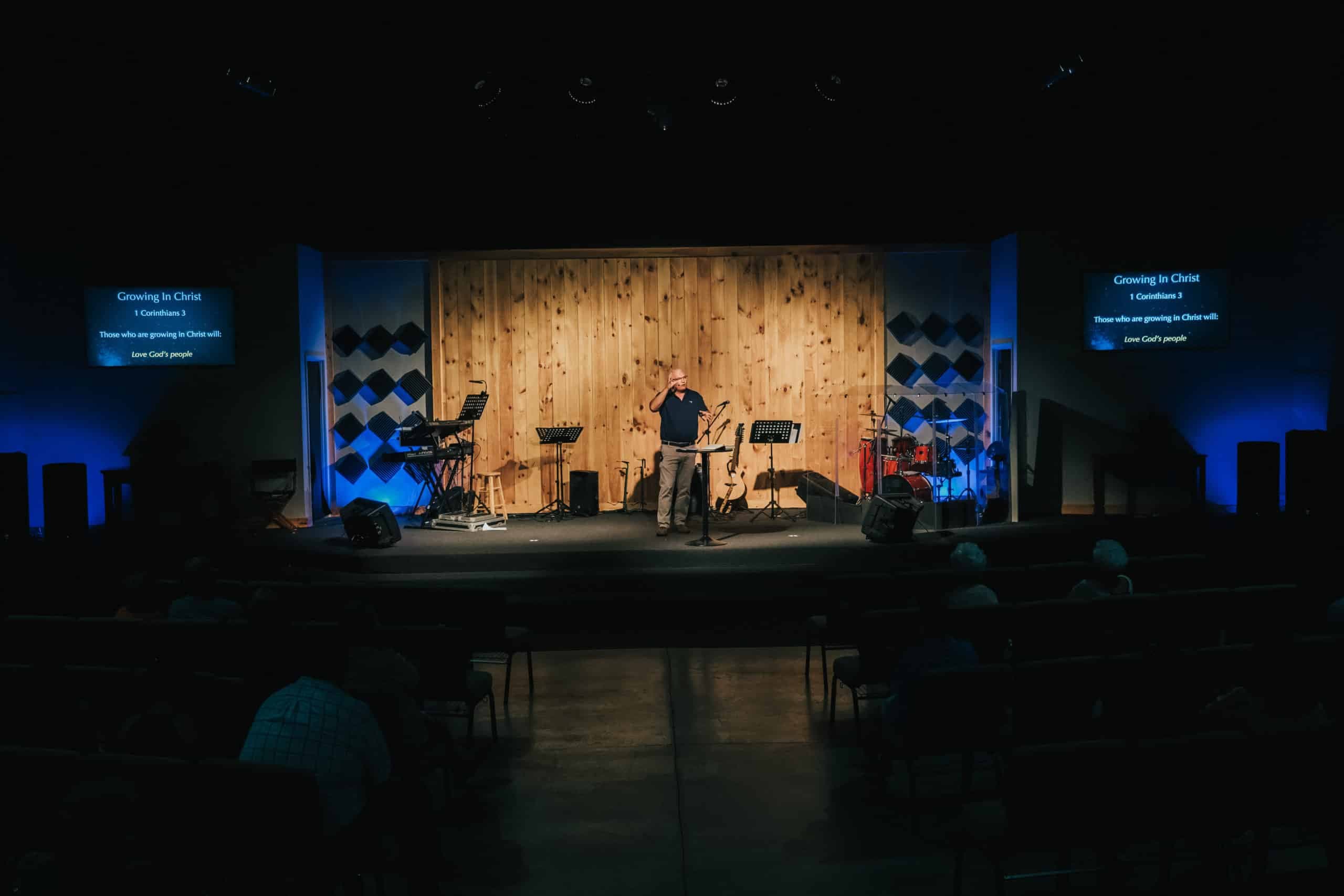
Scott Uselman calls us to lay down our pride and show real humility, sorrow, and transparency, learning from the woman who found grace and peace at Jesus’s feet in Luke 7:36-50.
Waiting for the Right Moment to Speak
Scott Uselman began by sharing how he had carried this message for a while, sensing a weight in its truth. He described how personal it felt: “I've gotten so much from just reading it for myself and hopefully you will too. But you know, I get up here and I'm like, well, I hope I don't let y'all down. Does that make sense?” The sermon wove in his own story of coming into church as an adult and the challenge it posed for someone known to have a public past.
His own experience returning to his Indiana hometown illustrated the awkwardness and self-consciousness of walking into a church where everybody knew his history: “There was probably one side that was really not happy to see us and then there was another side that was I don't know and that still happens. And… I had sinned publicly. Y'all hear me? I had a known lifestyle. I had a lifestyle that everybody knew about.” This real discomfort put him in the shoes of the woman in Luke’s story.
The Hard Road to Repentance: Pride Must Be Laid Down
Scott Uselman was direct about the courage it takes to seek Jesus when pride and shame threaten to hold us back. “Those who publicly demonstrate right repentance lay down pride and look for Jesus.”
Recalling his reluctance to attend church, he named the internal struggle: “In the moment that I'm reading God's word, I don't want to go to church. ...I think there's a little bit of shame at work in me because I understand who I've been. ...At some point, for me to please the Lord, I knew that I had to look for Jesus. This woman isn't invited to this Pharisee’s house... But you have to go to church. You've got to find Jesus. And you're going to have to lay your pride down.”
Scott pointed out how the woman in Luke’s story entered a space she was not welcome, to find Jesus regardless of judgment. We, too, he said, are responsible for seeking Christ even when shame and pride make it almost unbearable.
Humility and Sorrow: Owning Our Sin
Scott challenged the tendency in churches to make faith a quick fix, especially for youth, by declaring someone saved without teaching repentance. He described altar calls at youth camp as insufficient: “...I'm not sure they've actually ever owned their sin. Y'all hear me? I'm not sure they really understand the magnitude of the sin that they've committed.”
He broke down how the sinful woman’s humility went beyond apology, she gave up everything that marked her old life. Her tears, her hair (which may once have been used to attract customers), and her expensive perfume all became acts of sorrow and repentance: “She wipes his feet with that hair. That very hair that I can't help but think that she used to attract people to her. You know what she's doing? She's laying down that sinful life that she's led and she's doing it publicly.”
Her humility was not about dramatics but about being seen as she truly was and surrendering her need to save face or control her story. “This woman is likely…someone that everyone knew has committed terrible sin. More than likely…we might think she's a prostitute. …Somehow she has heard the message that Jesus is there to forgive sins. …She walked in anyway.”
Transparency in Shame: Moving Through the Gaze of Others
Scott Uselman underscored the courage it requires to be transparent about our failings before others. He noted the natural impulse for someone like Simon the Pharisee to prefer that the woman had just left, shamed by his silent judgment. “He's trying to get in the way of what Jesus is doing by giving this woman grace. He is.”
A critical turning point came as Scott addressed the reality of shame: “It seems to me when I talk about the pastor who sinned, it seems to me that shame is keeping people from coming to that church. Now, the only way for Jesus not to be defeated by the people is for the people to be transparent and say, ‘Yes, it happened.’ But from this day forward, we're going to follow Jesus Christ. Jesus came to save people who are egregious like us. Do y'all hear that? You own it. ...And you know what happens? The devil has no more power over you.”
He stressed that transparency, not perfection, breaks the cycle of shame and isolation. He brought this home with regular, everyday conviction: “What I wouldn't give for people who sin would just be honest. Just be honest. If you're going to commit sin, own it…”
Peace and Salvation: The Gift Only God Can Give
The closing movement lingered on Jesus’s words to the woman: “Then Jesus said to her, ‘Your sins are forgiven.’... Jesus said to the woman, ‘Your faith has saved you. Go in peace.’” This was not just about a future hope but the real possibility of peace in our lives, here and now, free from the accusations of others and our own hearts.
“...He's saying to her, ‘All this turmoil that you have in your life right now, all of this stuff...you knew you weren't good enough. You were ashamed. ...You were literally at war with the Lord. ...Let me tell y'all something. When I was not saved, when I wasn't a friend of God's, I was at war with the Lord. I knew I was.’”
He clarified that this peace is not automatic or mechanical: grace is imparted, but we have responsibility to answer, to repent openly and honestly. “For me to be able to lay my head down and get peace in my life, you got to confess it publicly to Jesus. Because you know what? Once I'm comfortable to tell y'all, yes, I've sinned greatly. The devil can't keep me up at night about it.”
Living It Out
Scott Uselman called us to a practical and honest faith: one where we lay down pride, demonstrate real humility, own our shame with transparency, and trust that it is Jesus who brings peace and salvation. We were invited not just to nod in agreement but to live this openness in our church family and beyond. “If you want to receive Christ and you want to publicly confess your sin, come through all these people. Who cares? Come break off that chain that would hold you down.”
May we be a church where it is normal, not strange, to confess freely and receive grace fully, where shame does not send anyone out the back door, and peace reigns as Christ’s promise to us all.
Discussion Questions
- When have you experienced shame when coming to church, and how did that impact your willingness to seek Jesus?
- What does it look like in your life to lay down pride and be transparent in front of others about your struggles?
- How might our church more fully help people move from shame to peace when they repent, the way Jesus welcomed the woman in Luke 7?
This Week’s Devotional
Laying Down Pride: Facing Jesus in Public
4 min read · Pastor Scott
Picture yourself walking into a room where everyone knows the worst about you. Imagine sitting among people who remember your flaws and failures. What does your chest feel like? For the sinful woman in Luke 7, it must have been a mix of trembling nerves and a deep push for something real. She risked her reputation, her comfort, and every ounce of her pride, the kind of pride that says, “Better to stay home than risk their looks or words.” But she went anyway, all for the hope that meeting Jesus would be worth it.
Midweek, you may find echoes of this story in yourself. Maybe you avoid certain phone calls, small groups, or the inside of the church sanctuary because of what you fear others see. Or maybe, like Scott Uselman shared from his own story, there’s a tape that plays in your mind about what you have done and what others must be whispering still. The step forward, through the thickness of that shame, is often the miracle.
This is not about dramatics or performances, it is about letting your mask slip and not scrambling to put it back. The woman’s tears, her hair, her perfume, they were all costly acts. Her sorrow was not staged; it was the direct result of truly seeing her life in the light of Jesus’s love.
In your own journey, laying down pride might mean simply admitting: I do not have it all together. I have sinned, I have needed grace, and sometimes what holds me back is not God’s judgment but my unwillingness to let anyone else see. When we begin telling the truth, even quietly, that is when grace comes running. Transparency is not weakness, it is courage that opens a door to peace.
Meditation focus: Ask yourself, “Where is shame holding me from drawing close to Jesus and others?”
Practical step: This week, open up to one trusted person about a place in your heart where pride has made you silent or distant. Lean toward honesty, just a step.
Closing Prayer:
Holy God, you are the one who sees me as I am and still welcomes me. Your presence is steady and your love does not turn away when I tremble. We want to want your will above the approval of others, even when our hearts quake. Meet our needs this week: give us courage to step forward, bread for the day, and enough faith to be honest. Where we have failed, forgive us; where we have hidden, gently draw us out into the light. Protect us from despair when old shame tries to close in, and teach us to walk in your peace. Let us become a place and a people who welcome others the way you have welcomed us, without conditions, without fear. Because you have given your peace, help us not to chase after counterfeit comfort or run away in pride. We rest in the promise that you save those who come openly, and we thank you for the gift of a new start. In your name we pray. Amen.
Hilltop Wesleyan Church
735 Golden Creek Rd, Liberty, SC 29657
Find Us
Contact Us
Hilltop Wesleyan Church believes in providing support and education to foster an ongoing relationship with Christ beyond salvation. Each day is an opportunity for us to grow closer to Him.
- 735 Golden Creek Rd, Liberty, S.C. 29657
- (864) 777-8472
- connect@hilltopwesleyan.org

We saved you a seat. Plan your first visit.
Let us know you’re coming and we’ll help you know exactly what to expect on your first Sunday at Hilltop.
Plan A Visit