

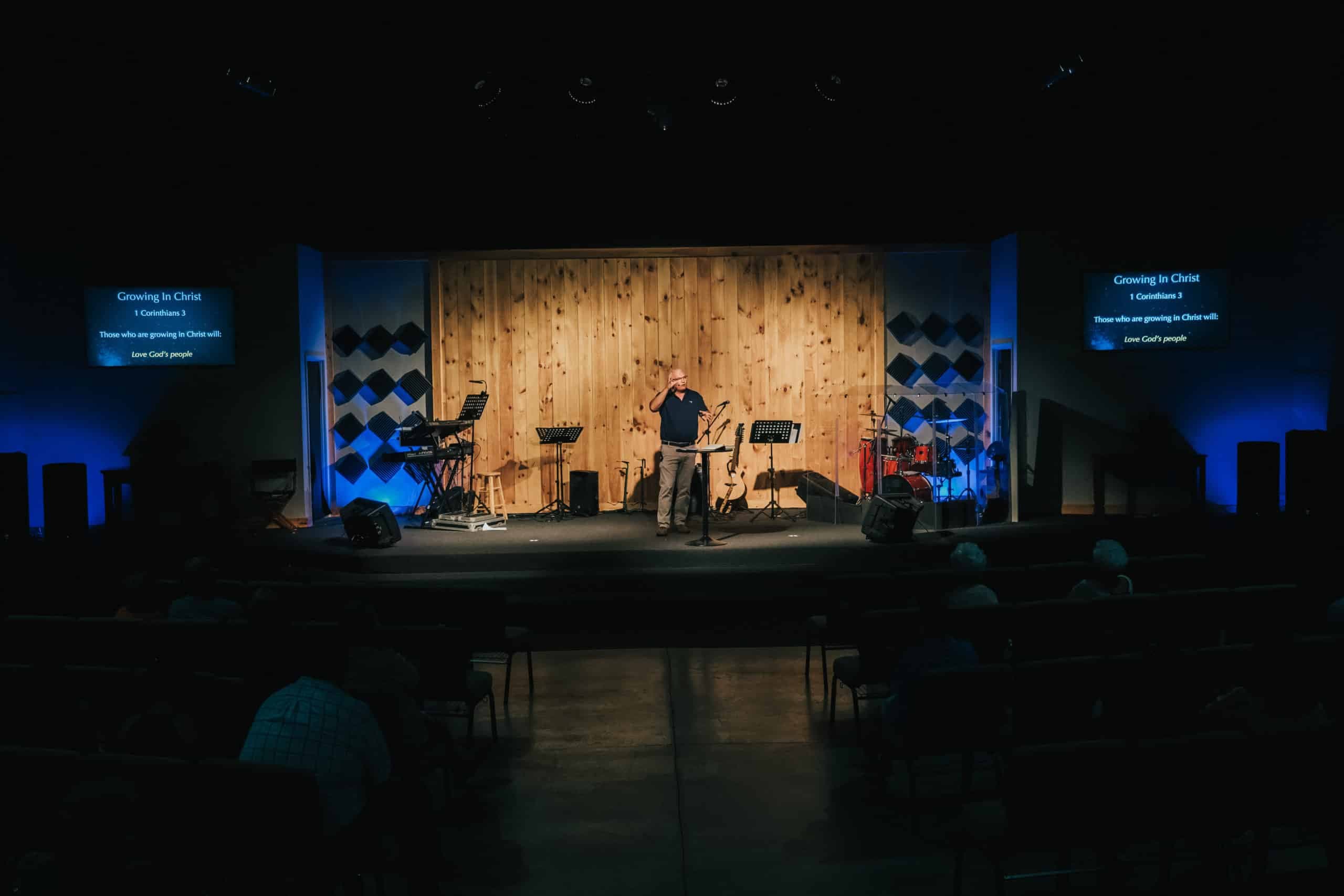
We Don’t Serve An 'It': KNOW Who You Serve
Dr. Charles Redwine
Philippians 3:8-11, 1 John 3:1-3 · October 25, 2026
Chapters
Scripture
Charles Redwine calls our church to truly know Jesus, fully God and fully human, so we may be restored, healed, and grow as children of God instead of settling for impersonal faith.
Why Knowing Matters in a Confused World
Charles Redwine greeted us with a simple but pointed challenge: how well do we actually know what we believe? He described the rising confusion around faith, a world that prefers to describe God as an impersonal 'it' or energy, which he contrasted with the biblical claim that God is someone we can truly know.
He recounted a recent encounter with a book rooted in modern spirituality:
"One man's truth is another man's blasphemy. ... God is not a creator nor responsible for the existence of things. We don't know what is. But it's the unseen energy that keeps our hearts beating and our lungs functioning."
Charles Redwine pressed us to name the difference between that kind of vague trust and the personal knowledge described in Scripture, drawing us to the heart of the sermon: "We don't serve an it. We don't serve an energy. We need to know who we serve."
Gnosticism, And the Age-Old Battle Over Who God Is
Drawing from 1 John, Charles Redwine gave us historical context: early Christians faced Gnosticism, a mindset denying that the material world was good and separating spirituality from physical reality. In the Gnostic story, a hidden divine spark might save some but not others. Salvation depended not on a Savior, but special knowledge, and ultimately placed hope in one's own internal light.
He put it in plain terms:
"This is what the disciples were up against, battling Gnosticism, that there is no good God, only an evil God who might bless you with a spark. ... Salvation then is through a secret knowledge."
But where Gnosticism (and, he noted, much of modern skepticism) treats God as distant or irrelevant, Charles Redwine called us back to a radically different claim: God wants to be known by us, and He calls us His children.
Philippians and 1 John: Knowing Christ as the Heart of the Faith
Reading Philippians 3:8-11, Charles Redwine led us through Paul's longing to know Christ, not just know about Him. The whole message turned on that word: know. In 1 John, he pointed out, the word appears thirty-six times:
"See what kind of love the Father has given to us, that we should be called children of God. Not little sparks, not little its. And so we are. ... The reason why the world does not know us is that it did not know Him."
He emphasized that our dignity and our future hinge on whether we know Jesus, truly, relationally, deeply.
Trust and Obedience: Living as God’s Children
Charles Redwine offered this contrast: the world doubts, dismisses, or redefines God, but God persists in calling out sons and daughters. That relationship comes with an invitation, not for secret knowledge but for obedience. He said, "We just need to learn to walk like Jesus."
He reminded us:
"Let us not love in word or talk, but in deed and in truth. By this we shall know that we are of the truth, and assure our heart before Him. ... If you confess that Jesus has come from God, that is the true Spirit."
Charles Redwine described common ways we weaken our connection to God: neglecting Scripture, skipping prayer, settling for surface-level church involvement. He urged us to examine our own habits:
"If you're not spending time with Him, if you're not spending time in the word, if you're not spending time in prayer, how are you getting to know Him? ... This is to prepare us to go out there."
Jesus as Fully God: The Only One Who Saves and Restores
Turning to the doctrine itself, Charles Redwine outlined why it matters that Jesus is fully God. He gave us three reasons, each one vital:
- Jesus has the authority to forgive sins. Not as a mere human, but as God Himself, He replaces the old system of offerings with forgiveness given by the power of God.
- Jesus has the authority to recreate humanity, restoring the image of God that was marred by sin. Only God can make us genuinely new.
- Jesus restores us relationally with God. We are brought not just to forgiveness but into God’s very presence, counted as sons and daughters through Christ.
He pressed this home: "If He were not fully God, He couldn’t forgive the sins. ... All the songs we have about being washed over by the blood, there’d be no forgiveness because He wasn’t God."
Jesus as Fully Human: The Healing and Example We Need
Why did Jesus have to be fully human? Charles Redwine made clear: only a fully human Savior could heal our corrupt and broken souls from the inside out.
He told us:
"The second Adam who did not fail, but lived a life of perfect faith and obedience to the Father. ... He’s our pathway. He’s to show us what life as a fully human being is supposed to be."
Jesus’ humanity means He can restore our brokenness, demonstrate obedience, and open a way for us to become truly human, the way God intended.
The Call to Live as Redeemed Children
The sermon closed with urgency. Charles Redwine asked our church: are we living any differently because of this knowledge? If we serve a real, knowable Savior, how does that reshape our week, our relationships, and our community?
He asked, with the weight of a pastor who has seen too many drift:
"If we’re not becoming more and more like Christ, then why are we coming to church? We should leave here every Sunday more filled with Jesus, more filled with the Spirit to be able to go out and have an impact."
He offered a personal story from his days as an EMT at age eighteen, when his visible joy, rooted in Jesus, made a co-worker uncomfortable but ultimately led her to faith. The takeaway: when we know Christ, the difference shows.
Living It Out: Taking Home What We Know
As we go, Charles Redwine’s call lingers: Do we know who we serve? Are we hearing Jesus with more than our ears? Open the Word. Spend time in prayer. Allow Christ to reshape not just what we believe but how we live, serve, and love, so that the world sees a light rooted in real, lived-out faith.
Discussion Questions:
- In what ways have you settled for knowing about God instead of truly knowing Christ as described in Philippians 3:8-11 and 1 John 3:1-3?
- How could you deepen your daily practices of prayer and Scripture, not out of obligation but for the sake of real relationship with Jesus?
- Where is your life showing the difference between serving an impersonal 'it' and living as a recognizable child of God?
This Week’s Devotional
You Are Not Just Energy: Knowing Jesus, Not an 'It'
4 min read · Dr. Charles
Pause this week on that central question Charles Redwine named: do you know who you serve? It is easy, in the rush of ordinary life or the swirl of opinions online, to shrink faith down to just another feeling, phrase, or spiritual energy. But the Word speaks over and over: you are called to be a daughter, a son, a person who knows not just ritual or tradition, but a living Savior.
What if you spent this week watching for ways you are tempted to settle for the vague or impersonal? Notice when 'God' slips into the background, vague and unchallenging, or when your faith turns into running on memory instead of meeting Jesus afresh. 1 John is relentless about this word: know. Not feeling, not guessing, not hoping someone else has it all figured out. You are invited to belong, to know, and to be known.
When Charles Redwine told the story of a co-worker pushed closer to faith not by arguments, but by his persistent joy in Christ, it was a gentle reminder for us: when you live as a child of God, people notice, even when they cannot name what is different yet. Let your simple faith, the kind that sings while working, echo beyond these walls.
Meditation Focus: Today, offer up the question, "Jesus, what does it mean for me to really know you, here, now, in this day?" Sit with it; let it unsettle routines. Let it draw you beyond mere belief into honest relationship.
Practical Step: Choose one day this week to read 1 John 3:1-3 and Philippians 3:8-11 aloud. Pray slowly over the words, underline what stirs you. Tell God directly where you feel distant or doubtful. Ask for the desire to know Him more deeply, not just know about Him.
Closing Prayer:
God, you are worthy of our full-hearted trust. You are not a distant force or nameless spirit, but the One who made us and calls us by name. You have set before us the gift of knowing you, of turning and being found as daughters and sons near your heart.
Today, we admit how easily we drift, how quickly we trade the living Christ for routine, how we settle for energy when you offer relationship. We ask you to provide what we need to come close: open ears, soft hearts, courage to pray and seek you when we feel dull or doubting. Feed us with truth and grace. Forgive us when we try to earn what you so freely offer or when we hide behind distractions. Deliver us from treating faith like a checklist.
Lead us into the kind of life that cannot stay hidden: loving like Jesus, serving not for show but from genuine transformation. Give us a joy that is stubborn and a witness that is gentle. Keep us ready for the day you call us home and let us walk every day until then as your beloved children. Amen.
Hilltop Wesleyan Church
735 Golden Creek Rd, Liberty, SC 29657
Find Us
Contact Us
Hilltop Wesleyan Church believes in providing support and education to foster an ongoing relationship with Christ beyond salvation. Each day is an opportunity for us to grow closer to Him.
- 735 Golden Creek Rd, Liberty, S.C. 29657
- (864) 777-8472
- connect@hilltopwesleyan.org

We saved you a seat. Plan your first visit.
Let us know you’re coming and we’ll help you know exactly what to expect on your first Sunday at Hilltop.
Plan A Visit