

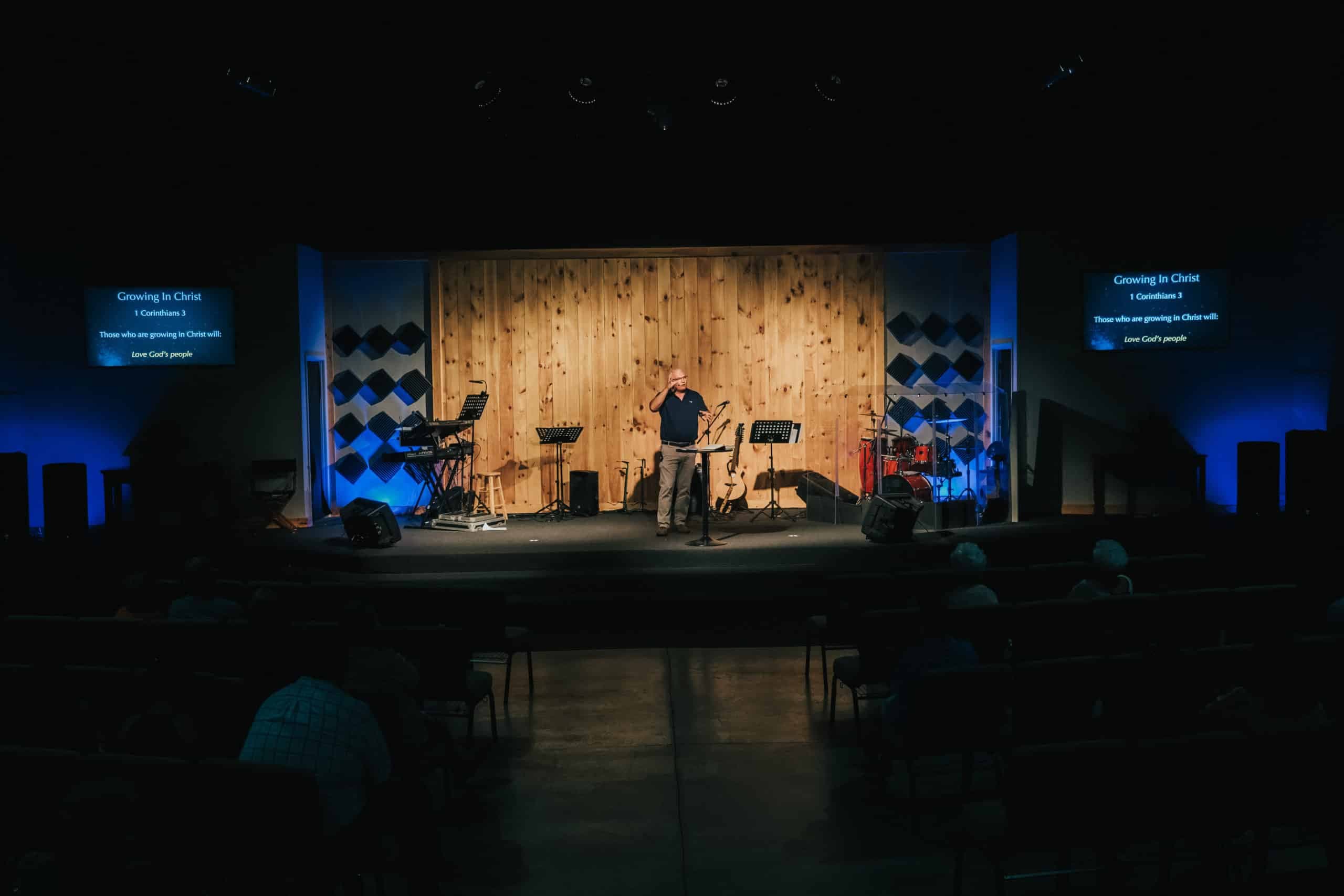
The Positive Problem of Pain
Dr. Charles Redwine
Genesis 37-42, Mark 14:32-42, Mark 14:43-72, Hebrews 12:1-3 · August 2, 2026
Chapters
Scripture
Dr. Charles Redwine explores how pain shapes our faith, drawing from the stories of Joseph, Jesus in Gethsemane, Judas and Peter's failures, and the call in Hebrews to endure with perseverance.
The Paradox We Carry
Dr. Redwine began by acknowledging that all of us know pain. Whether it's the sudden sting of the dentist's drill or a deep grief that leaves us unable to move, pain is a universal teacher. He opened with the story behind a familiar hymn born out of unspeakable loss and asked, "How is it that God can bring greatness out of such pain?" This is the paradox at the heart of Christian life: the positive problem of pain. We live life in paradox, praising God even as we walk through hardship.
He encouraged us to name pain not just as a physical sensation, but as a force that works on us: "Pain has power. There is a power to it. Why? Because it'll move you up. It'll take you down. It'll run you forward or cause you to retreat. Pain will move you. Will never leave you the same."
Staying Honest About Hurting
From the dentist's chair to hospital rooms, Dr. Redwine drew out the body's wisdom: "When there is pain, what do we want to do, folks? We want to get out of there." That instinct to flee goes deeper than broken bones or bruises; it attaches to our more hidden wounds. "But we don't do that with our emotional pain. There are pains inside that people don't see. Matter of fact, sometimes when we have that kind of pain, we don't want to come to church."
He reminded us that pain can paralyze, not only physically, but also in our relationships and spiritual walk. There are hurts only God sees, regret, rejection, humiliation, loss of identity, abandonment. "Why did my mom leave me? Why was I left... There's incredible reality. When the power of God intersected the pain of the world, it produced a cross. And what did Jesus tell us to do with that cross? Take it up and follow me."
Pain in the Story of Joseph (Genesis 37-42)
Turning to scripture, Dr. Redwine traced pain through the life of Joseph: "So tell me, what did Joseph do wrong? Nothing. At age 17, he had a dream and he told his family about it." He described in full the betrayals Joseph suffered: left in a pit, sold into slavery, wrongly accused, jailed. All the while, the Scripture holds a tension: "What you intended for evil, God... intended for good."
He asked, "Have you ever done that? Gone through a trial and you come out and go, 'I think God meant this for good in my life'?" Joseph’s story makes us wrestle with the mystery that God can work through pain, even when it feels senseless.
Jesus in the Garden (Mark 14:32-42)
Then Dr. Redwine brought us to Gethsemane, where Jesus Himself was "deeply distressed and troubled":
"My soul is overwhelmed with sorrow to the point of death."
Jesus pressed into prayer in agony, asking God for another way, yet surrendering: "Not my will, but yours." Even as He prayed, His closest friends slept, missing His hour of deepest need. "The spirit is willing, but the flesh is weak." We were reminded that Jesus knows the full spectrum of pain, not just bodily, but also the loneliness, fear, and disappointment that come with it.
Failure and Restoration: Judas and Peter (Mark 14:43-72)
The sermon moved next to two men who failed Jesus, Judas and Peter. Judas, overwhelmed by his betrayal, "went out and committed suicide." Peter failed publicly and bitterly, denying Jesus three times, but found a different ending, restoration. Dr. Redwine retold how after the resurrection, Jesus met Peter by the shore:
"He actually gave all my back to his old life, said, 'Peter,' three times and you know the story. 'Do you love me?' Yes, Lord. You know I love you. Then pick up your cross daily... Get off your butt and go tend my sheep."
We were challenged not to sit in the ache of failure or retreat from the task Jesus has for us, but to be restored and sent out.
The Cloud of Witnesses and Running with Perseverance (Hebrews 12:1-3)
Hebrews calls us into a larger story: "Therefore, since we are surrounded by such a great cloud of witnesses... let us throw off everything that hinders... and let us run with perseverance the race marked out for us, fixing our eyes on Jesus, the pioneer and perfecter of faith." The sermon pressed us to keep moving, even in pain, because Jesus endured the cross "for the joy set before him."
"We have to be persevering Christians, not quitting Christians."
Here, pain is not the end. It becomes part of our witness, part of how we hold hope in adversity.
Seeing Pain as a Gift
Not everything painful is good, but pain can become a teacher. "We have to see pain as a gift. It's letting us know that something is wrong." Dr. Redwine illustrated this with the story of a diabetic who could not feel the dangerous wound in his foot: pain, when lost, removes knowledge that can bring healing. Learning to listen in pain is essential. Instead of rushing to talk, he asked us to try: "Say, 'Lord, if the pain is part of my healing, what do I need to hear from you?'"
God’s Means of Grace
Dr. Redwine taught on the means of grace, ways God sustains us when we hurt:
- Reading the word: "Open it to Psalms. Walk around the house. Start reading it. Read it aloud. Let the word speak to you."
- Worship and fellowship: Gathering as the body to bear burdens and receive.
- Communion: "Folks, when we come up here, this is God's grace being poured... To remember his death until he comes."
- Prayer: Beyond surface-level "praying hands," a true covenant to pray for one another seasons suffering with support and hope.
- Experiential grace: "Start praising God... Thank you for that Sunday school class that really met my need."
- Confession and honest struggle: "Who in here is perfect? Folks, we struggle. This is the place that it's okay to come and say, 'I struggle.'"
Carrying the Cross, Trusting the Surgeon
As the sermon drew to a close, Dr. Redwine likened God to a surgeon who continues cutting until the problem is healed, even if it hurts more in the moment:
"If He stopped before the operation was complete, all the pain up to that point would have been useless. Can you trust God that He is a skillful surgeon?"
He called us to trust that even when the healing comes with pain, God is good and will not abandon us.
Living It Out
Pain is not an experience we seek, yet it shapes us. We do not walk through our suffering alone. With God’s presence and the family of faith beside us, we can learn to trust, to ask for help, and even to thank God in the trials. We are invited to let our pain become means for growth, hope, and deeper community.
Discussion Questions
- Where in your own life have you seen pain serve as a turning point for growth or grace?
- What holds you back from sharing your struggles more openly with our church family?
- How might you become a channel of grace for someone in the midst of pain this week?
This Week’s Devotional
Sitting With the Cross: The Gift of Pain
4 min read · Dr. Charles
When Pain Won’t Let You Move
In the middle of our week, after the dust of Sunday has settled, there are moments when pain, physical, emotional, or spiritual, finds us sitting still. Maybe you recognize the scene: you cannot rise, and help feels far away. Dr. Charles Redwine reminded us that there's a powerful instinct to flee discomfort, but our real invitation is into honest presence and surprising grace.
He offered us the image of Jesus on the ground in Gethsemane, face to the earth, overwhelmed by sorrow. Not as a hero defying pain, but as one willing to sit right in the middle of it and speak truthfully. The question for us is: What if our pain is neither punishment nor mistake, but a meeting place where God wants to be with us?
Perhaps you want to run, retreat, or hide your wounds even from the ones who love you. Yet, the cross in your story is not a mark of failure, it's proof that Jesus walks this road. Instead of numbing, denying, or escaping, what if you sat with your pain in God’s company and let sisters and brothers carry some of the weight?
Meditation focus: Let God meet you on the ground; your pain is not the end of your story.
Practical step: This week, invite someone to pray with you about one struggle you usually keep hidden. Trust that naming it aloud is an act of faith, not shame.
Prayer
God of all comfort, you are holy and you are near. We thank you for not leaving us when sorrow presses heavy. We surrender to your wisdom and ask for courage to trust your ways, even when the path hurts and we want relief more than lessons. Please give us what we need for this day: healing in our bodies, peace in our minds, support from your people. Forgive us when we hide our wounds or turn inward instead of asking for help. Let us offer the same patience and mercy to others that you show to us. Walk with us through suffering. Keep us from despair and teach us to hope, so pain does not have the last word. We trust you to bring good from what confuses or wounds us. We look for light in the shadow of the cross. In Jesus’ name, Amen.
Hilltop Wesleyan Church
735 Golden Creek Rd, Liberty, SC 29657
Find Us
Contact Us
Hilltop Wesleyan Church believes in providing support and education to foster an ongoing relationship with Christ beyond salvation. Each day is an opportunity for us to grow closer to Him.
- 735 Golden Creek Rd, Liberty, S.C. 29657
- (864) 777-8472
- connect@hilltopwesleyan.org

We saved you a seat. Plan your first visit.
Let us know you’re coming and we’ll help you know exactly what to expect on your first Sunday at Hilltop.
Plan A Visit